
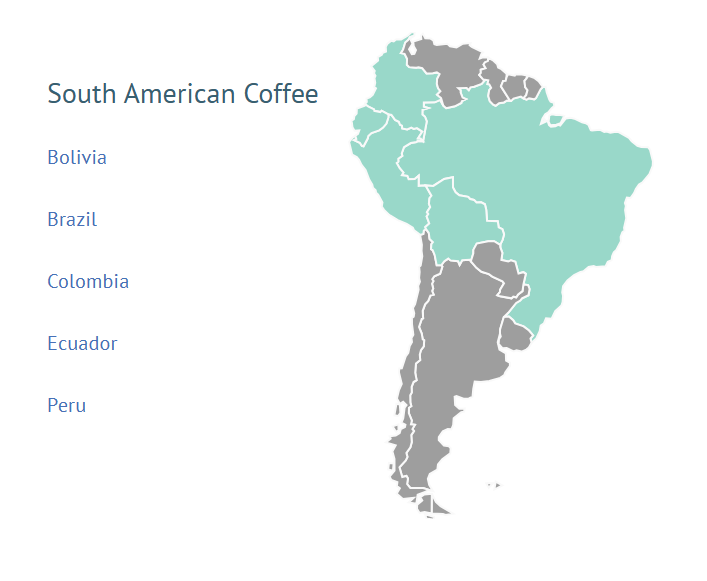
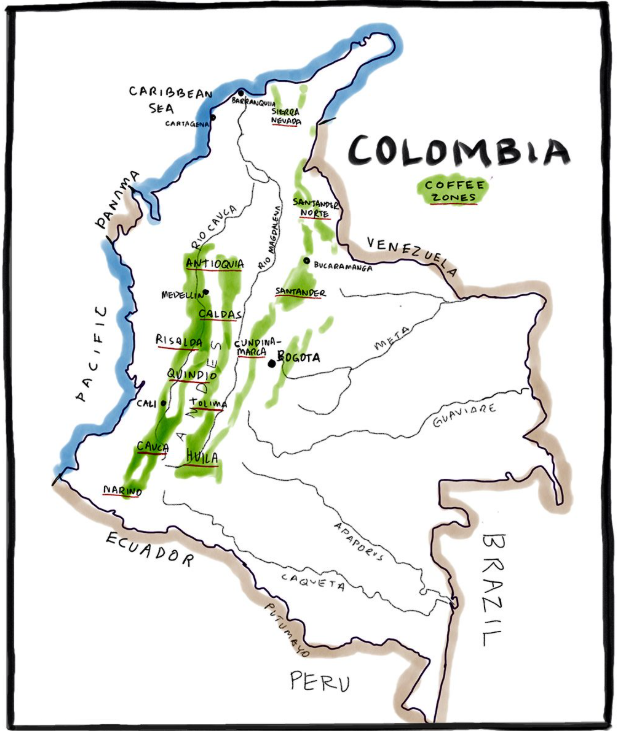
Colombia is the world's third-largest coffee producer and the largest producer of Arabica beans, renowned for a mild, balanced flavor profile with notes of caramel, chocolate, and bright citrus acidity. Grown at high altitudes (3,000–6,000 feet) in the Andes Mountains, the beans are primarily hand-picked and shade-grown. The unique geography allows for year-round harvesting, with key regions like Huila, Nariño, and the Coffee Axis producing distinct, high-quality coffee.
Key Colombian Coffee Facts:
100% Arabica: Colombia exclusively cultivates Arabica beans, which are known for a sweeter, smoother, and lighter taste compared to Robusta.
Ideal Climate: The proximity to the equator, combined with volcanic soil and consistent rain, creates perfect, frost-free growing conditions.
Hand-Picked Quality: Due to steep, mountainous terrain, most coffee is harvested by hand, ensuring only the ripest cherries are selected.
Small Farmer Focus: A vast majority of coffee comes from small family-run farms rather than large plantations.
Cultural Significance: In 2011, UNESCO declared the "Coffee Cultural Landscape" of Colombia a World Heritage Site.
Flavor Profiles: While generally balanced, Southern regions tend to be more acidic and floral, while Northern regions offer fuller-bodied, nuttier, and more chocolatey flavors.
Benefits and Characteristics:
Unique Aroma: Known for a strong, pleasant, and often fruity aroma.
Versatility: Due to its balanced nature, it is highly sought after for both espresso-based drinks and pour-over methods.
Health Benefits: As a high-quality coffee, it is rich in antioxidants, contributing to overall health benefits.
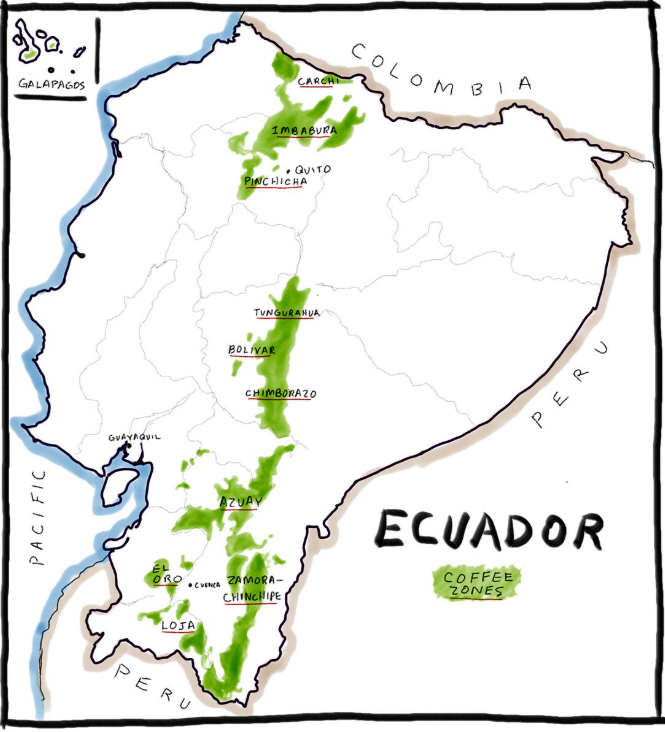
Ecuadorian coffee is characterized by its high-altitude cultivation, producing balanced, bright, and clean Arabica with flavor notes of stone fruit, citrus, and chocolate. Primarily grown on small, family-owned farms (1-10 hectares), Ecuador is a unique producer that exports both Arabica and Robusta, with major regions in Manabí (coastal) and the Andean slopes.
Key facts about Ecuadorian coffee include:
Production & Regions: While Manabí is the largest producer (roughly 50%), the best quality beans come from higher-altitude regions like Loja, Pichincha, and the Galápagos Islands.
Unique Market Dynamics: Ecuador is known for being a major producer of soluble (instant) coffee. It often imports cheap Robusta from Vietnam for domestic consumption while exporting its own, higher-quality beans.
Cultivation & Varieties: Many farms use traditional, older cultivars like Typica. Due to the small-scale nature of farming, much of the coffee is naturally organic.
Quality Trends: While historically overlooked, recent initiatives (including the Cup of Excellence) have pushed production toward high-end specialty, particularly through advanced, double-fermentation techniques.
Growing Conditions: The unique, volcanic soil and high altitudes of the Andes provide an ideal environment for Arabica.
Harvest Season: The main harvest runs from May to September, though this varies by region.
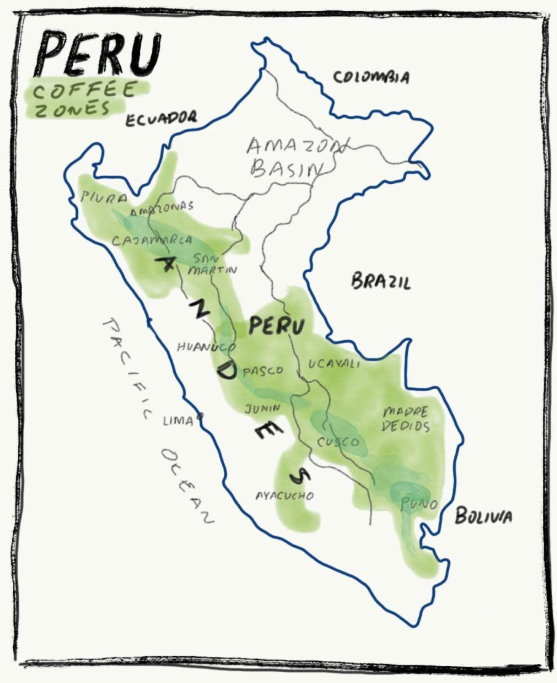
Peruvian coffee is renowned for being high-altitude, shade-grown, and mostly organic, often produced by small-scale, fair-trade cooperatives in the Andes. As a top-10 global exporter and the world's second-largest exporter of organic coffee, Peru offers Arabica beans with mild acidity, medium-full body, and tasting notes of nutty, chocolatey, and fruity flavors.
Key Facts About Peruvian Coffee
Production & Scale: Over 150,000 families grow coffee, with 95% operating on farms smaller than 5 hectares. Coffee is a leading agricultural export, with production largely centered in regions like Chanchamayo, Amazonas, and the Andes.
Growing Conditions: Coffee is cultivated at high altitudes, often between 3,200 – 6,000 ft.
Flavor Profiles: Typically, the coffee is known for a mild acidity, medium body, and notes of nuts, flowers, and gentle fruit. High-altitude beans from Cusco/Machu Picchu often have a brighter, more vibrant profile.
Varieties: Nearly all Peruvian coffee is Arabica, with 70% being the Typica variety, followed by 20% Caturra.
Organic Focus: Peru is the world's second-largest exporter of organic coffee.
Processing: Most Peruvian green coffee is wet-processed (washed) at the farm level.
Challenges & Growth: While known for high quality, some coffee can suffer from inconsistent picking or processing. However, increased investment is improving quality control, with a 16% rise in production forecasted in recent years.
Unique Aspects
Eco-Friendly: Most coffee is shade-grown, preserving the local environment.
"Poop Coffee" (Mishasho): Peru produces a rare, expensive coffee (often called Capis/Mishasho) where the Coati (a raccoon-like animal) eats coffee cherries, which are then harvested from their waste.
Primary Regions: Key growing regions include Amazonas, San Martin, and the Andes.
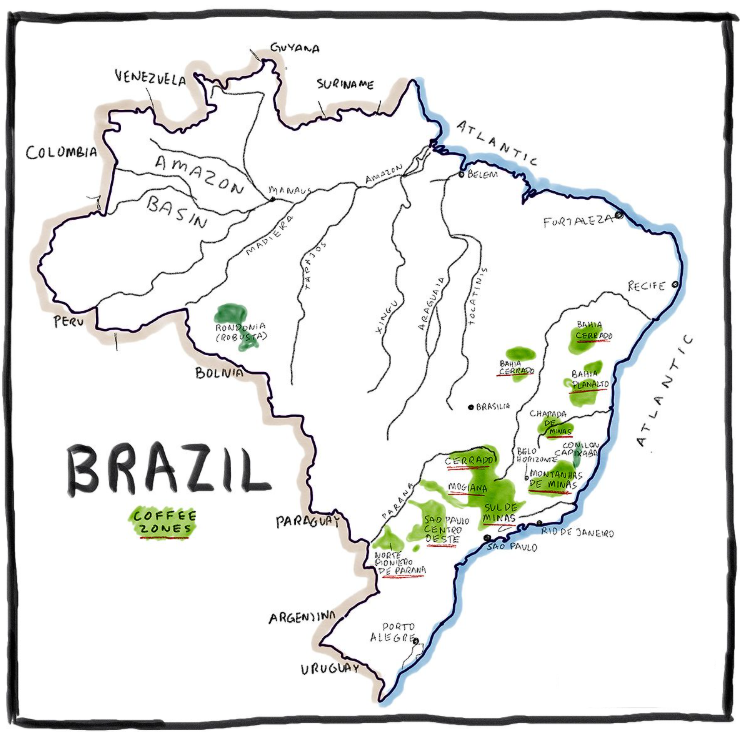
Brazil has been the world's largest coffee producer and exporter for over 150 years, supplying roughly one-third of the global coffee supply. Primarily producing Arabica beans, Brazilian coffee is known for its mild, low-acid, and full-bodied flavor, with notes of chocolate, caramel, and nuts. Coffee is crucial to Brazil's economy and culture, with over 3.5 million people working in the industry.
Key Coffee Facts in Brazil:
Production & Volume: Brazil produces roughly 30%–35% of the world's coffee. It has over 18 billion coffee trees and nearly 6.7 million acres of planted land.
Major Regions: The top producing states include Minas Gerais (about 50% of the harvest), São Paulo, Espírito Santo, Bahia, Paraná, and Rondônia.
Varieties: While mostly known for Arabica (approx. 70-80%), Brazil also produces significant amounts of Robusta (called Conilon).
Flavor Profile: The coffee is generally characterized by a smooth, mellow flavor, often making it the base for many commercial espresso blends.
Growing Conditions: Most coffee grows at lower altitudes 3,000-4,000 feet compared to other regions, which influences the mild, low-acid profile.
Important Export: Coffee was once the primary driver of Brazil's economy and remains a major export, with 2024 exports exceeding 2.5 billion kilograms.
Consumption: Brazil is not just a producer; it recently became the world's #1 consumer of coffee, surpassing the United States.
Harvesting Methods: Due to the large, flat landscape of many farms, Brazil utilizes mechanized harvesting techniques.
Top Exported Type: The Bourbon Santos is a well-known, high-quality, and historical, often medium-bodied, variety.
Other Facts: It is prohibited to import raw coffee into Brazil.