
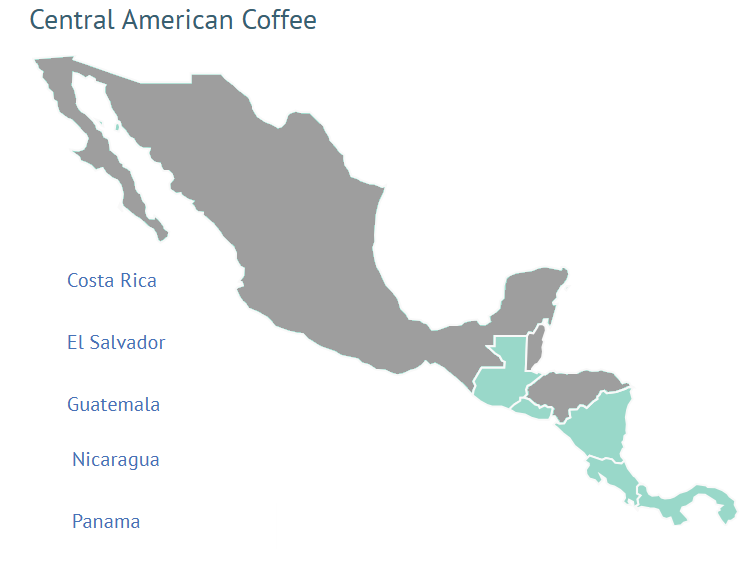
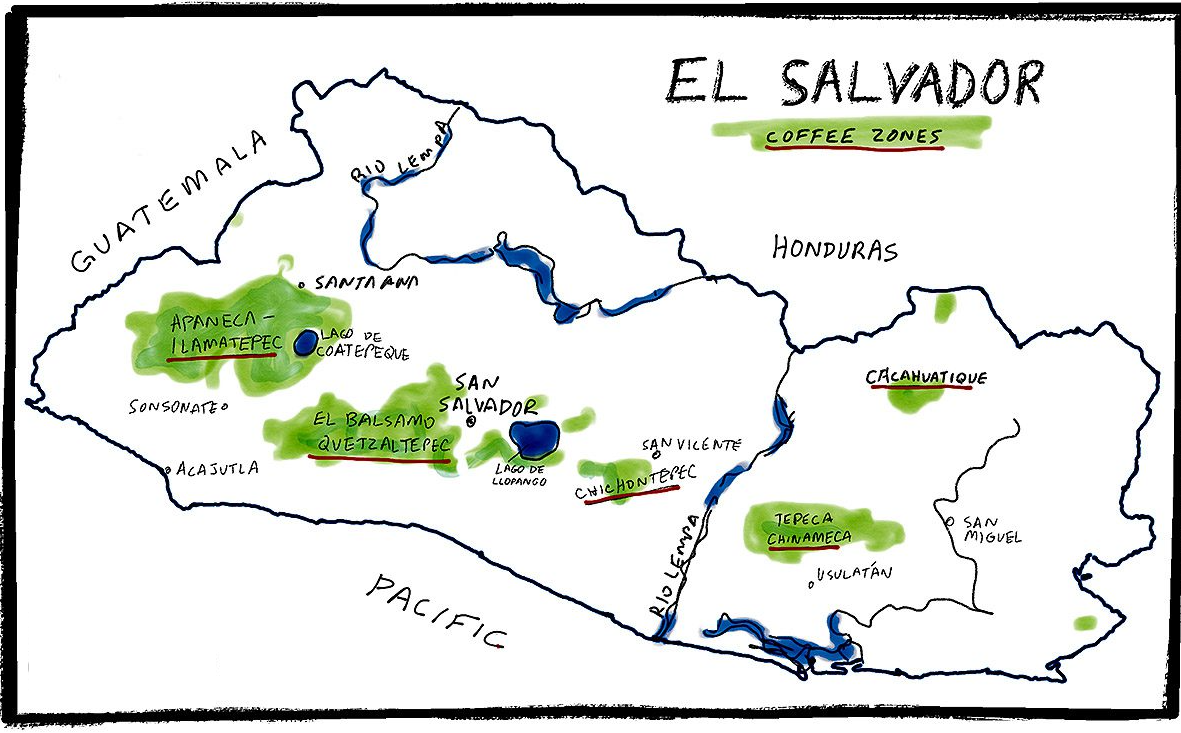
El Salvadoran coffee is celebrated for its sweet, balanced, and mild flavor profile, often featuring notes of caramel, chocolate, and bright fruit, making it a high-quality, often shade-grown, specialty choice. As a major producer of Arabica, particularly the Bourbon, Pacas, and Pacamara varieties, it thrives in volcanic soil and high altitudes.
Key Facts About El Salvador Coffee:
Taste Profile: Known for being very sweet, balanced, and smooth, with subtle acidity and medium body, making it ideal for both drip coffee and espresso.
Variety & Cultivars: Primarily cultivates Arabica, including high-quality Bourbon, Pacas (a natural mutation of Bourbon), and Pacamara.
Growing Conditions: Over 90% of coffee is grown under shade, which contributes to slower maturation and enhanced flavor.
Key Regions: Major coffee-growing regions include Apaneca-Ilamatepec, Central Valley (El Bálsamo-Quezaltepec), Tecapa-Chinameca, and Cacahuatique.
Harvesting Time: The main harvest season runs from October to March.
History: Known as "el grano de oro" (the grain of gold), coffee became the primary export in the late 19th century, replacing indigo.
Small Producers: While historically dominated by large estates, many farms are now small, with over 70% of farms being less than one hectare.
El Salvador is considered a "hidden gem" in specialty coffee, often providing excellent, affordable, and high-quality beans.
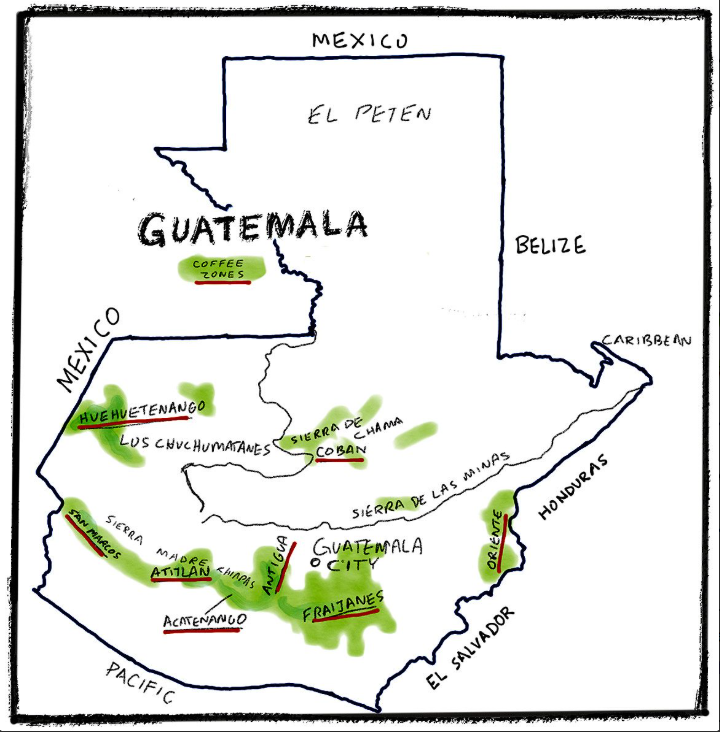
Guatemala is a top-10 global coffee producer renowned for high-altitude, shade-grown Arabica, with over 98% of its coffee grown under trees. Cultivated in volcanic soil across 20 of 22 departments, it is known for a rich, complex flavor profile—often featuring chocolate, spice, and fruity notes with high acidity. The country utilizes a "rainbow of choices" marketing approach for its diverse, mostly washed-process, high-altitude (SHB/SHG) coffees.
Key Facts About Guatemalan Coffee
Production & Ranking: As of 2022, it is among the top 10 coffee-producing countries, historically a top producer in Central America.
Altitude & Growth: Most coffee is Strictly High Grown (SHG) at 1,600–4,900+ feet, resulting in a denser bean and richer flavor.
Volcanic Terroir: The country has 37 volcanoes, providing mineral-rich soil that enhances the flavor profile.
Primary Varieties: Primarily Arabica, including Bourbon, Caturra, Catuai, Typica, and specialty beans like Pacamara.
Key Regions (The "Rainbow of Choices"):
Antigua: Famous for full body, chocolate, and spice notes.
Huehuetenango: Known for winey and fruity flavors.
Atitlán: Crisp, citrusy acidity with high fragrance.
Cobán: Medium body with fruity flavors.
Fraijanes Plateau: Known for bright acidity.
Oriente: Full-bodied with chocolate notes.
San Marcos: Delicate floral notes.
Processing Method: The majority is "washed" or wet-processed due to high humidity.
Sustainability: Approximately 98% of coffee is shade-grown, which promotes biodiversity and protects the ecosystem.
Industry Importance: Coffee is a major export, with the industry supporting over 125,000 families.
History: Introduced in the 1700s by Jesuits, coffee became a major commercial industry in the 1850s.
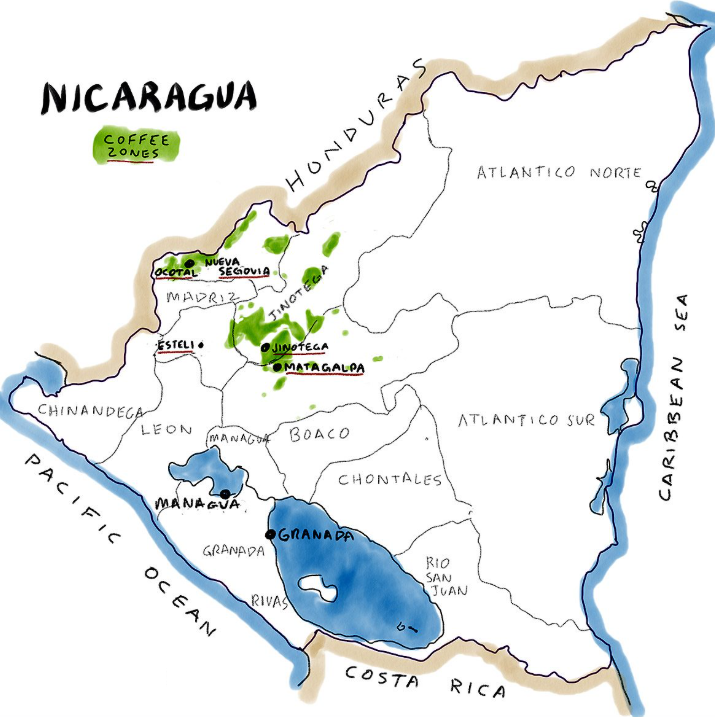
Nicaraguan coffee is celebrated for its balanced, smooth, and clean profile, often featuring notes of chocolate, caramel, and citrus. Grown primarily by smallholders in high-altitude volcanic regions like Jinotega and Matagalpa, it is largely shade-grown and renowned for high-quality Arabica varieties. It is a major economic driver supporting over 45,000 families.
Flavor Profile and Characteristics
Taste Profile: Generally balanced, sweet, and nutty with a medium-to-full body.
Acidity: Lower acidity compared to other Central American coffees, often described as bright and citrusy but not sharp.
Key Notes: Common notes include chocolate, caramel, brown sugar, and nuts.
Varieties: Predominantly 100% Arabica, including Caturra, Bourbon, Pacamara, Maragogype (Elephant Bean), and Typica.
Growing Regions and Conditions
Top Regions: The majority of coffee is grown in the mountainous north-central region, specifically Jinotega (producing ~80% of the coffee), Matagalpa, and Nueva Segovia.
Altitude: Cultivated between 2,000 and 5,000 feet above sea level. Higher altitudes (4,000ft+), known as Strictly High Grown (SHG), produce denser, more flavorful beans.
Soil: Rich volcanic soil and a tropical, high-altitude climate provide ideal growing conditions.
Shade Grown: Approximately 95% of coffee is shade-grown, preserving biodiversity.
Production and Industry Facts
History: Coffee was introduced around 1796, with commercial exports beginning in the 1850s.
Economic Impact: The industry supports over 45,000 to 300,000 farming families, with 95% being small-holder farmers.
Harvest Time: The harvest season typically runs from October to March.
Processing: Most coffee is wet-processed (washed), though honey and natural processes are becoming more popular.
Sustainability: Nicaragua is known for producing high-quality, sustainably grown, and certified organic or fair trade coffees.
Unique Aspects
Maragogype: Known for producing huge beans (Elephant Beans) that are popular among specialty coffee enthusiasts.
Starmaya: In 2019, researchers introduced Starmaya, a new F1 hybrid designed for high yield and rust resistance.
Sustainability & Shade: The focus on shade-grown coffee helps protect the local ecosystem from deforestation.
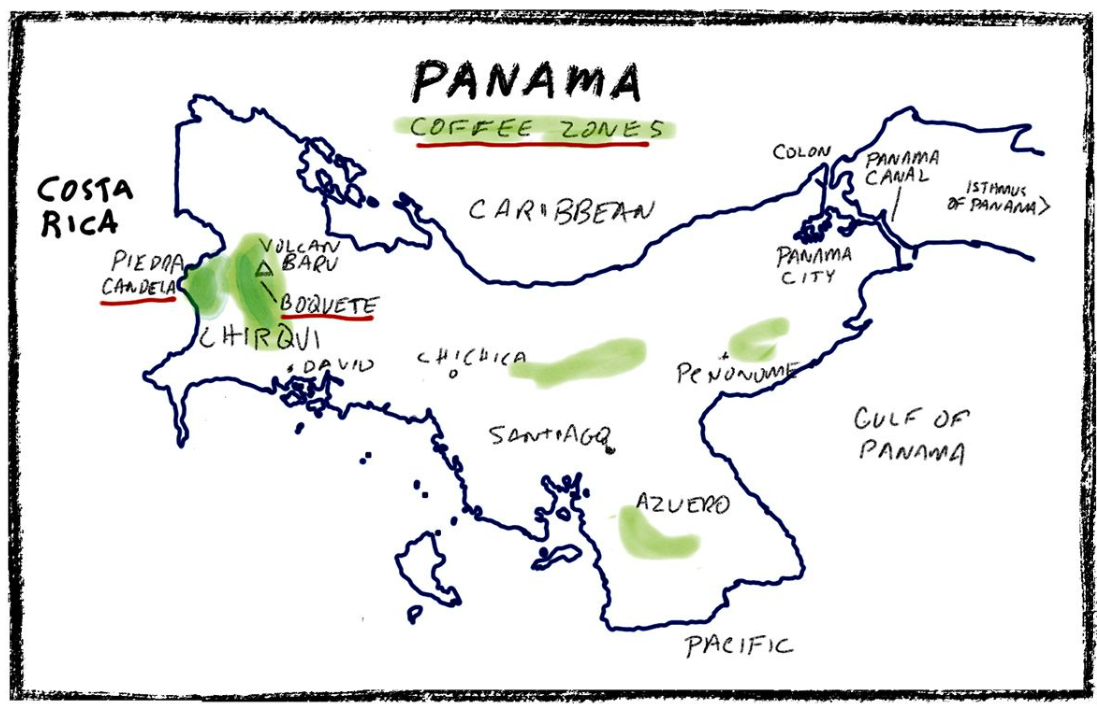
Panama is renowned for producing some of the world's most expensive and high-quality coffee, specifically the Geisha (Gesha) variety, which frequently breaks price records (exceeding $1,000–$2,000 per pound at auction). Grown primarily in high-altitude, volcanic regions like Boquete and Volcán, the coffee is celebrated for its floral, jasmine, and fruity flavor profiles.
Key Facts About Panama Coffee:
The Geisha Phenomenon: Originally from Ethiopia, the Geisha variety was introduced to Panama in the 1960s and thrives in the Chiriquí province due to high altitude, rich soil, and unique microclimates.
Key Growing Regions: The top areas are Boquete, Volcán, and Renacimiento, which are situated around the Volcán Barú.
Record Prices: Panama Geisha coffee is famous for setting records in the "Best of Panama" auction, with some, like Ninety Plus, selling for over $2,000 per pound.
Flavor Profile: Known for a delicate, tea-like body with complex notes of jasmine, bergamot, peach, citrus, and honey.
Industry Focus: While Panama produces only about 0.1% of the world's coffee, it dominates the high-end specialty market. Roughly 82% of its production is Arabica, with 18% being Robusta.
Labor & Environment: Many farms are small, family-owned operations that are often shade-grown to protect local biodiversity. The indigenous Ngäbe and Buglé people play a crucial role in harvesting and quality control.
Panamanian coffee is generally considered one of the best in the world, regularly winning prestigious, international coffee competitions.
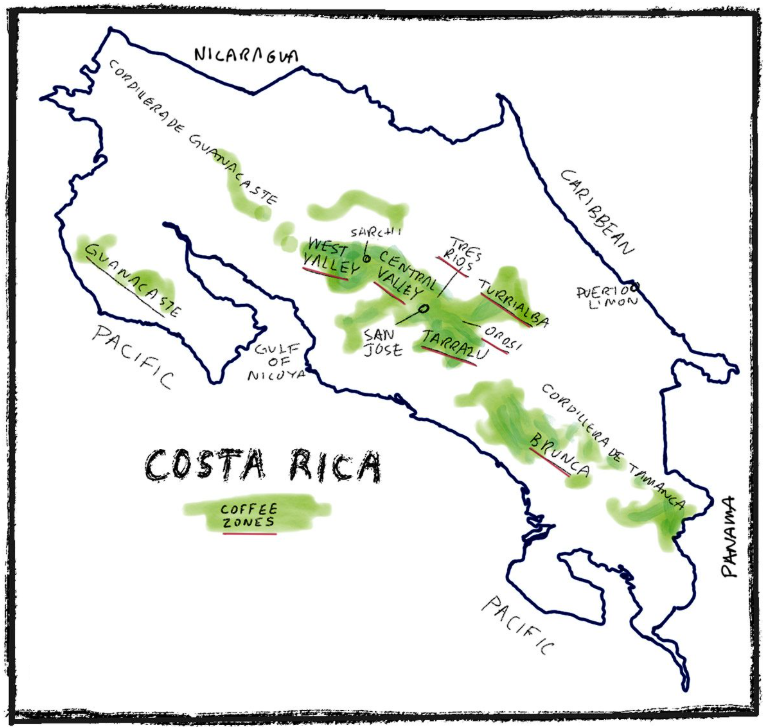
Costa Rican coffee is globally renowned for its high-quality, 100% Arabica beans, characterized by a bright, clean, and often citrusy, sweet flavor profile. Grown in nutrient-rich volcanic soil at high altitudes, it is primarily produced by small farmers with a focus on sustainable, Strictly Hard Bean (SHB) standards, with Tarrazú being the most famous region.
Key Facts About Costa Rican Coffee
Legal Requirement for Quality: Since 1989, it has been illegal to produce any, lower-quality coffee (like Robusta) in Costa Rica; only 100% Arabica is permitted.
Volcanic Soil & Elevation: The combination of nutrient-dense volcanic soil and high altitude (required for high-altitude SHB classification) produces denser, more flavorful beans.
Top Regions: While Tarrazú is the most recognized, other key regions include West Valley (known for, fruity, sweet profiles), Central Valley, and Tres Rios.
Small-Scale Production: Almost 90% of all coffee producers in Costa Rica cultivate their, crops on small, family-owned farms of less than 12 acres.
High-End "SHB" Standards: Many beans are classified as "Strictly Hard Bean" (SHB), meaning they grew at high altitudes, resulting in slower maturation and more complex flavors.
Premium Pricing & Sustainability: Costa Rican coffee often commands a higher price due to strict, labor regulations, environmental, sustainability, and high-quality,, standards.
Economic Impact: Coffee, makes up, 11% of the country's export revenue, with 90% of the, total harvest exported.
Cultural Significance: Coffee, is deeply embedded in, culture, with locals, often enjoying a "cafecito" (afternoon coffee break).
Diverse Processing: While traditional, washed processes are common, many, producers are, exploring, natural and honey-processed methods, particularly in the Central Valley.