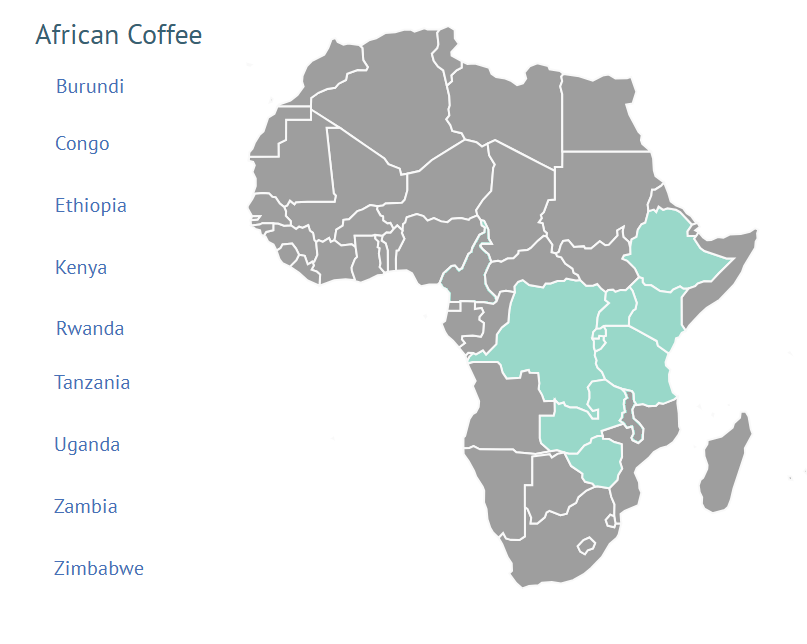
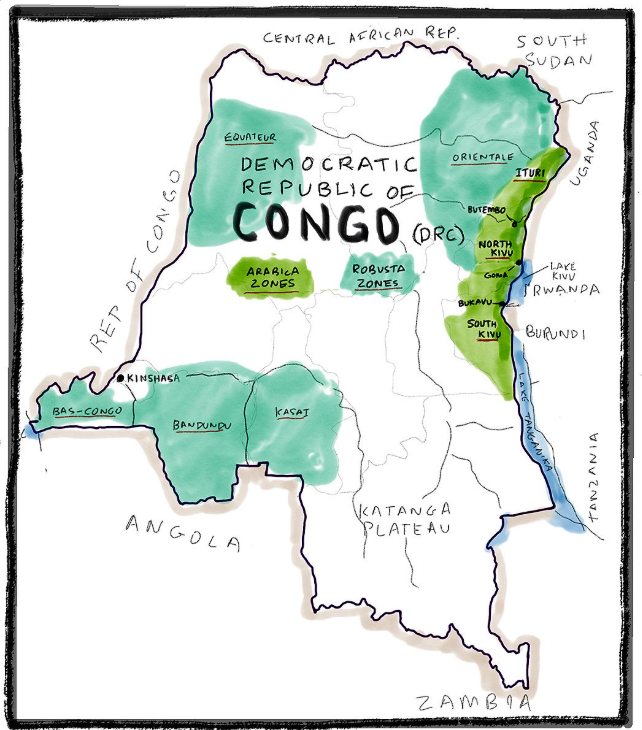
Congolese coffee, primarily grown in the high-altitude, volcanic soil of the eastern Kivu region of the Democratic Republic of Congo (DRC), is known for its bright acidity, medium-to-full body, and complex flavors often featuring fruit, chocolate, and nut notes. While the country produces both Arabica and 70-80% Robusta, it is increasingly recognized for high-quality specialty coffee, particularly from regions near Lake Kivu.
Key Facts About Congo Coffee:
Flavor Profile: Often described as a mix of African and Latin American profiles, tasting notes frequently include citrus, berries, tropical fruits, brown sugar, caramel, and chocolate.
Growing Regions: Production is centered in North Kivu, South Kivu, and Ituri for Arabica, while Robusta is grown more widely across the country.
Ideal Conditions: The Kivu region's high altitude (
meters), rich volcanic soil, and tropical climate provide a "paradise" for coffee cultivation.
Varieties: Primarily Bourbon (Arabica) is grown in the East, known for its sweet, balanced cup.
Industry Challenges: Decades of conflict and instability have hindered production, leading to many beans being smuggled to neighboring countries, though the industry is now experiencing a resurgence.
Ethical Sourcing: Cooperatives like SOPACDI have pioneered Fair Trade and organic certification in the region, helping to ensure farmers receive fair payment and investing in community infrastructure.
Sustainability: Many producers in the DRC use shade-grown methods, which are environmentally sustainable, notes this article from Ororo Experience.
Despite historical challenges, Congolese coffee is gaining recognition as a high-quality "final frontier" for specialty coffee.
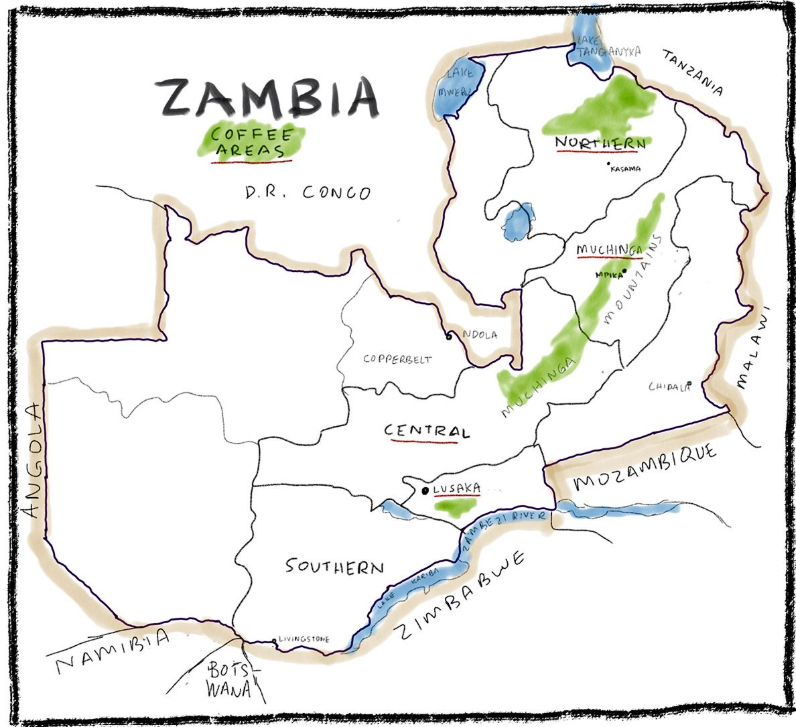
Zambian coffee is a high-quality, primarily Arabica, specialty coffee grown at high altitudes in Northern Zambia and around Lusaka. Known for a balanced, full-bodied profile with citrus, berry, and chocolate notes, it is often described as a "gentler" alternative to other East African coffees.
Key Facts About Zambia Coffee:
Flavor Profile: Generally clean, balanced, and sweet with moderate, bright acidity. Common notes include citrus (lemon/lime), berries, and milk chocolate. It is sometimes called "changeable coffee" because it can display intense fruitiness when hot and shift to smokey/chocolaty notes as it cools.
Growing Regions: The majority is grown in the mountainous Northern Province (notably Kasama), which has ideal high-altitude, high-rainfall conditions. Some production also exists near the capital, Lusaka, and in the Southern Province.
Varieties: Primarily Arabica, with popular varieties including SL-28 (known for Kenyan-like quality) and some Catimor for disease resistance.
Production Methods: Much of the production comes from larger, well-organized estates, such as the Northern Coffee Corporation Limited (NCCL) in Kasama, which is the largest producer. Most coffee is washed (wet-processed).
History & Scale: While coffee was introduced in the 1950s, the industry is relatively young, becoming a serious, organized producer over the last 30 years. It is a small producer in the African context, roughly 53,000 bags annually.
Harvest Season: The harvest typically occurs during the dry season, from May to November.
Sustainability & Growth: There is a renewed focus on supporting smallholder farmers through training and cooperatives, driven by investors like Covoya.
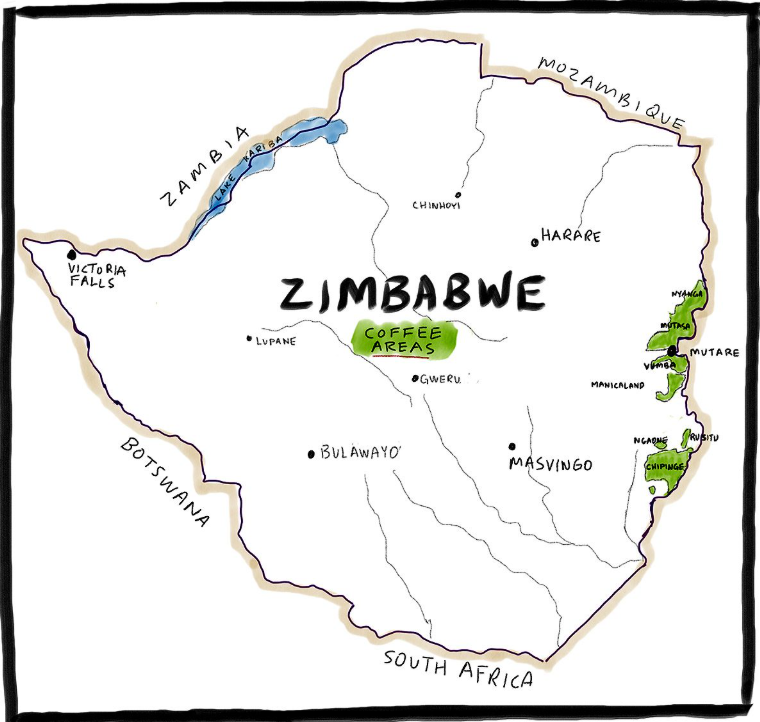
Zimbabwean coffee is highly regarded for its rich, complex, and wine-like acidity, often compared in quality to Kenyan coffee. Primarily grown in the eastern highlands (Chipinge), these Arabica beans feature notes of chocolate, red berries, and citrus. Though production plummeted in the early 2000s, it is undergoing a quality-focused revival.
Key Facts About Zimbabwe Coffee:
Flavor Profile & Characteristics: Known for a balanced, medium-bodied cup with a distinct "winey" acidity, along with notes of cocoa, berries, and sometimes a woody or nutty aroma.
Primary Growing Regions: The "Coffee Belt" lies in the eastern highlands, particularly Chipinge, Chimanimani, Vumba, and the Honde Valley, bordering Mozambique.
High-Quality Arabica: The country produces, almost exclusively, high-quality Arabica beans, with popular varieties including SL28, Catimor, and Bourbon.
Harvesting and Processing: The main harvest period runs from May to September. Most coffee is wet-processed (washed) and sun-dried.
Production & Revival: After peaking in the 1980s, production dropped significantly in the early 2000s due to economic instability. Organizations like TechnoServe are currently working with farmers to revive the industry, supported by Nespresso’s Reviving Origins program.
Optimal Growing Conditions: The high altitude 3,000- 5,2000 ft, heavy rainfall, and cool temperatures in the Eastern Highlands provide an ideal climate.
Coffee Culture: While historically a tea-drinking nation, the specialty coffee scene is growing in cities like Harare.
Zimbabwean coffee is increasingly sought after by specialty roasters for its unique, bright profile.
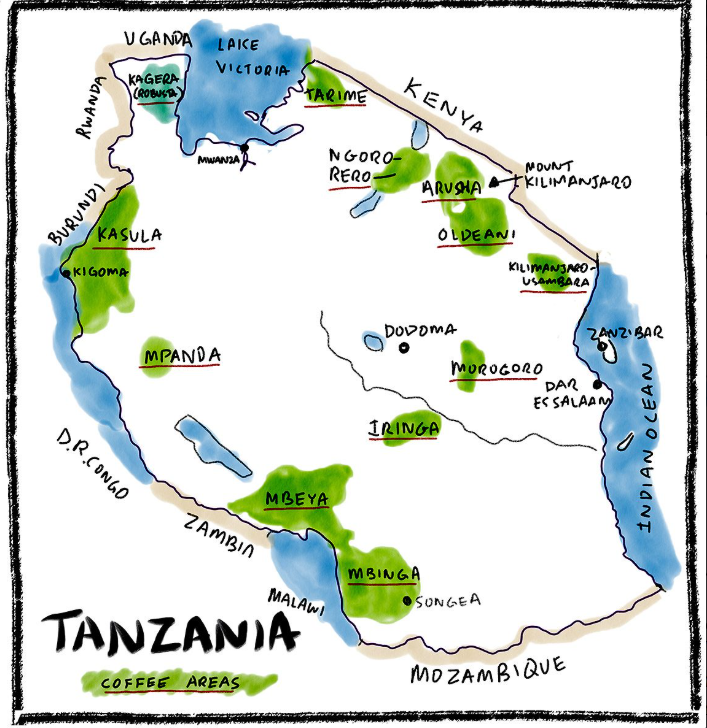
Tanzanian coffee is renowned for its high acidity, bright flavor profile, and full body, with tasting notes ranging from citrus and black tea to berries. Grown primarily by smallholders on the slopes of Mount Kilimanjaro and Mount Meru, roughly 70% is Arabica, with a reputation for intense, high-quality beans.
Key Facts About Tanzania Coffee:
Flavor Profile: The coffee is famous for a bright, wine-like acidity, often described as having a winey acidity, medium-to-full body, and tasting notes of black tea, chocolate, black currant, and citrus.
Tanzania Peaberry: A highly prized variation where only one small, round bean develops in the cherry instead of two, creating an even more intense and bright, citrusy cup.
Primary Growing Regions: Located in the northern regions of Mount Kilimanjaro and Mount Meru (Arusha/Moshi), as well as southern regions like Mbozi and Mbinga.
Production & Farmers: Tanzania is Africa's fourth-largest coffee producer, with 90% of production coming from small-scale farmers.
Growing Conditions: Cultivated at high altitudes ranging from 4,5000 to 6,500 feet above sea level in volcanic soils.
Processing: Almost all coffee in Tanzania is wet-processed (washed).
Grading: Similar to Kenyan coffee, the highest grade is AA, followed by A and PB (Peaberry).
Commonly Used Coffee Varieties:
Kent & Bourbon: The main varieties, with some Typica/Nyara and Colombia hybrids.
History & Economics:
Origins: Coffee was introduced to the region on a large scale by German missionaries in the late 19th/early 20th century, though it was known earlier.
Significance: Coffee is a vital export crop, with record production reaching over 80,000 metric tons in the 2022/2023 season.
Harvesting: The harvest season for Arabica typically runs from July to December.
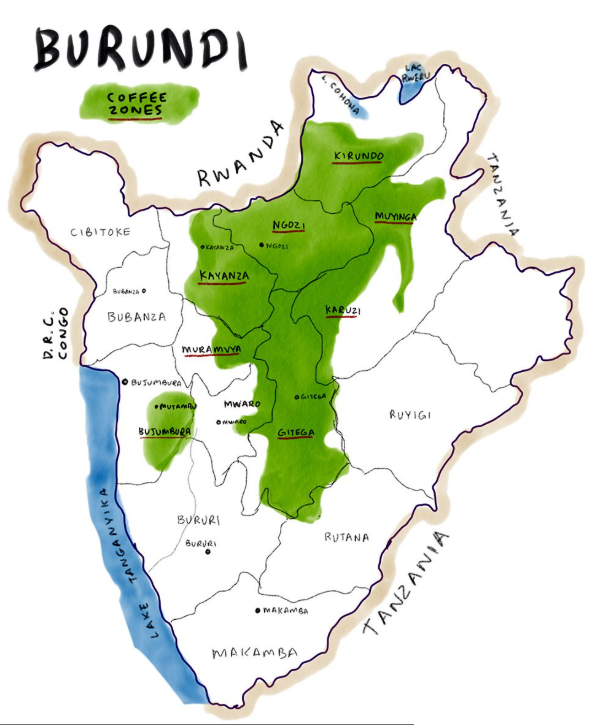
Burundi coffee is renowned for its bright, high-altitude Arabica (primarily Bourbon) beans, characterized by intense citrus, blackcurrant, and floral notes with a tea-like, sweet, and clean finish. Grown in nutrient-rich volcanic soil, this specialty coffee is largely produced by smallholder farmers in the north (Kayanza/Ngozi), often utilizing a unique "double-washed" technique to enhance clarity and quality.
Key Facts About Burundi Coffee:
Variety & Growing Conditions: Almost exclusively Arabica, with the Red Bourbon variety dominating. Coffee is cultivated at high elevations, typically between 4,100 and 6,500 feet above sea level.
Flavor Profile: Known for vibrant, lively acidity and complex flavors including berry (blueberry/blackberry), citrus, and, at higher elevations,, hints of pineapple and passionfruit. They often have a red-wine-like, juicy body.
Processing Method: Traditionally "wet-processed" or "washed," often involving a rigorous, traditional "double-fermentation/double-washing" method that produces a very clean, refined cup.
Smallholder Domination: Over 800,000 families, with farmers often tending to small plots of only 50–250 trees.
Quality Focus: While historically sold in bulk, Burundi has shifted towards high-quality, traceable specialty coffee, particularly in regions like Kayanza and Ngozi.
Culture & Economy: Coffee is the country's primary cash crop, introduced by the Belgians in the 1930s and deeply integrated into the culture for livelihoods.
Burundi coffee is often compared to neighboring Rwanda in its quality, with a distinctive, intense, and sweet flavor profile.
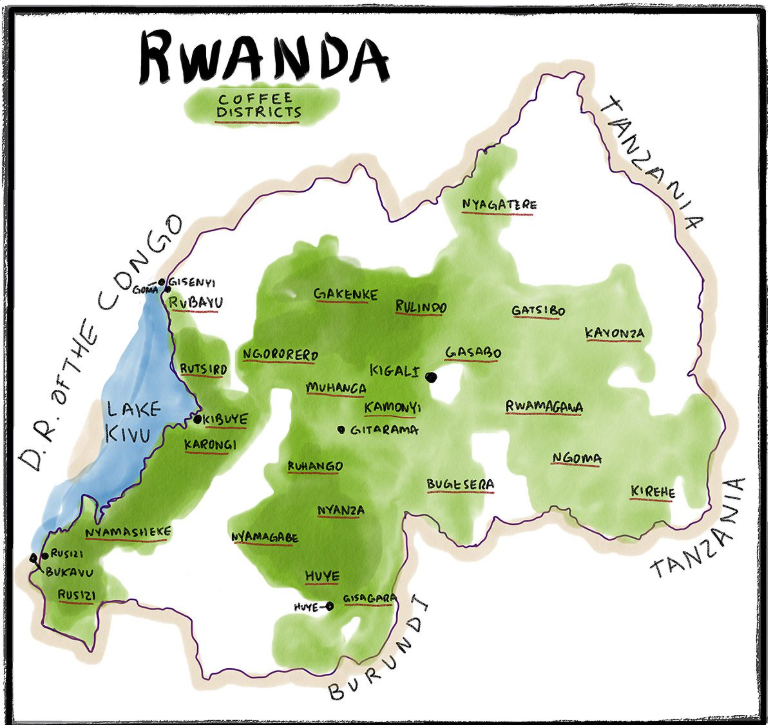
Rwanda produces high-quality Arabica coffee, primarily the Bourbon variety, known for its sweet, floral aroma, bright citrus acidity, and creamy body. Grown at high altitudes in volcanic soil, this specialty coffee is cultivated by around 400,000–500,000 smallholder farmers. The main harvest season runs from March to July.
Key Facts About Rwanda Coffee
Variety and Profile: Over 95% of the coffee is Bourbon, resulting in a cup often described as having hints of orange blossom, caramel, red berries, and lemon.
Growing Regions: Key regions include Virunga, Kivu, Kizi Rift, Akagera, and Muhazi.
Smallholder Farming: Farms are very small, often defined by the number of trees (average 165) rather than land area, which is typically under one hectare.
Processing: While traditionally home-processed, there is a massive focus on high-quality wet processing at communal washing stations.
History & Economy: Introduced in 1904, coffee is a vital economic driver. Following the 1994 genocide, the industry was rebuilt, shifting from low-grade, high-volume production to specialty, high-value exports.
Harvesting: Coffee is meticulously hand-picked and sorted.
Rwanda's unique, high-altitude volcanic landscape provides ideal conditions for producing some of the finest specialty coffee in East Africa.
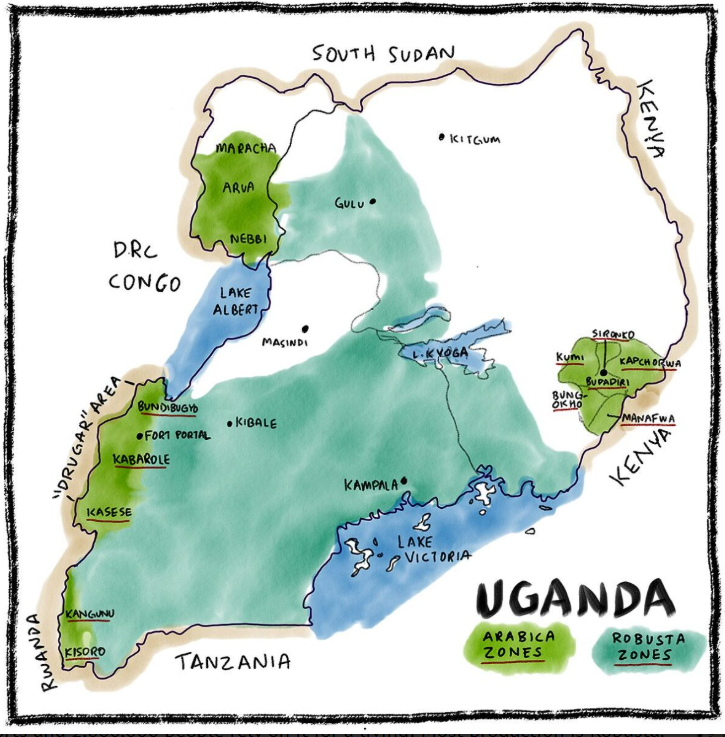
Uganda is Africa's top coffee exporter and the world's 6th largest producer, with 95% of its exports driven by 300,000+ smallholder farmers. As the native home of Robusta, it produces high-quality, full-bodied coffee (approx. 85% Robusta, 15% Arabica). Key regions include Mount Elgon (Arabica) and the Lake Victoria basin.
Key Facts About Ugandan Coffee
Origin of Robusta: Uganda is the birthplace of Robusta (Coffea canephora), which grows wild in forests around Lake Victoria.
Production Ranking: Uganda is the 6th largest producer globally and the largest in Africa.
Economic Backbone: Coffee is central to Uganda's economy, accounting for 95% of its export revenue.
Smallholder Dominated: Over 1.7 million smallholder households rely on coffee farming, with average farms around 0.18 hectares.
Types of Coffee:
Robusta (approx. 85%): Known for a strong, bold, and sometimes bitter flavor profile, used frequently in espresso blends and instant coffee.
Arabica (approx. 15%): Grown at higher altitudes (4,200–7,200ft) in regions like Mount Elgon (Bugisu) and the Rwenzori Mountains, offering cleaner, more acidic, and fruity flavors.
Cultivation Practices: Many farmers use traditional techniques, but there is a growing shift toward sustainable, organic, and shade-grown practices.
Harvest Times: The main harvest varies by region, but largely occurs between October and February, with a secondary "flycrop" in warmer months.
Processing Methods: While many use the traditional dry (natural) method, more farmers are switching to the washed method for cleaner, brighter flavor profiles.
Coffee Wilt Disease (CWD): In the early 2000s, CWD devastated nearly half of Uganda's Robusta trees, leading to a significant drop in production, though the industry has since recovered.
Cultural Significance: Before colonial times, the Baganda people traditionally chewed raw coffee cherries as a stimulant, medicine, and in social rituals.
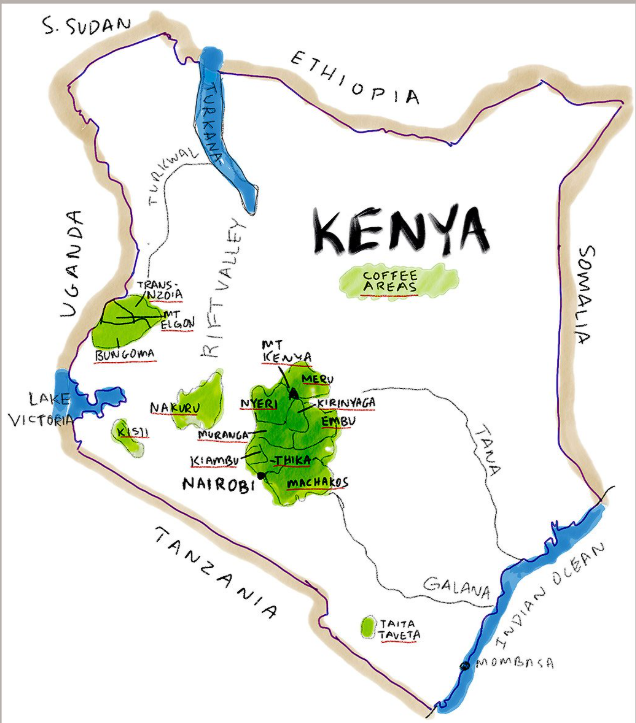
Kenyan coffee is globally renowned for its, bold, bright, and fruity flavor profile, characterized by high acidity, intense blackcurrant notes, and wine-like quality. Cultivated primarily in high-altitude volcanic soil around Mt. Kenya, these Arabica beans are known for their meticulous "AA" grading and unique "double-washed" processing method, which ensures exceptional cleanliness and flavor.
Key Facts About Kenyan Coffee
Distinct Flavor & Aroma: Often described as the "Connoisseurs Cup," it features bright, fruity notes like citrus, blackcurrant, and berries, paired with a full-bodied richness and a sweet finish.
High Altitude & Soil: Grown at high altitudes in nutrient-rich volcanic soil, which forces the cherries to grow slowly, concentrating their flavors.
"Double" Washing Process: Kenya is famous for its unique processing: beans are fermented, washed, and then fermented again in water for 24 hours, enhancing clarity and acidity.
Key Varieties: The most famous, high-quality varieties are SL28 and SL34, which were developed for their complex flavor, alongside disease-resistant varieties like Ruiru 11 and Batian.
Grading System: Kenyan coffee is strictly graded by size and density. The largest and most desirable beans are classified as "AA," followed by A and AB.
Industry Structure: While historically dominated by large plantations, about 60% of modern production comes from smallholder cooperatives that sell through a transparent weekly auction in Nairobi.
History: Coffee was introduced to Kenya in 1893 by French missionaries, though commercial cultivation was largely restricted to British colonists until after1933.
Benefits and Characteristics
Sustainability: Over 40% of Kenya's coffee production is Rainforest Alliance certified, focusing on biodiversity and water conservation.
Economic Impact: The industry supports millions of Kenyans, with coffee being a top export.
Health: Studies suggest that Kenyan coffee, when consumed, can significantly aid in reducing postprandial blood glucose levels.
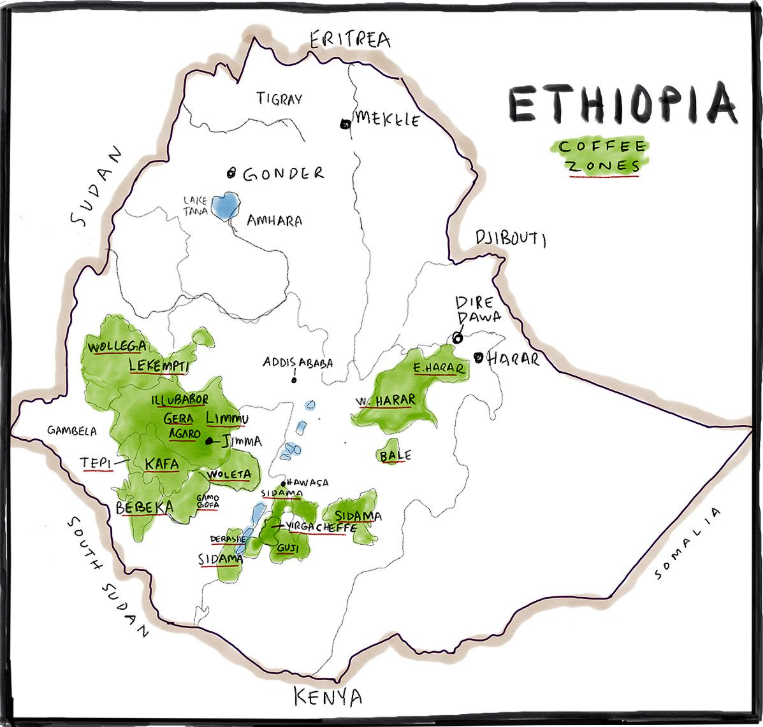
Ethiopia is the birthplace of Coffea arabica, offering the world’s most diverse, high-quality, and genetically varied coffee, often featuring floral (jasmine), fruity (berry), and tea-like, bright, or winy flavors. As the fifth-largest global producer, its economy relies heavily on this industry, with over 15 million people involved in production.
Key Facts About Ethiopian Coffee:
The Legend of Kaldi: Legend says coffee was discovered in the 9th century by a shepherd named Kaldi, who noticed his goats became energetic after eating red berries from a, now known as, coffee shrub.
Unique Flavor Profiles: Ethiopian coffees are renowned for complex, vibrant, and aromatic profiles, often described as having notes of jasmine, bergamot, blueberry, strawberry, and lemon.
Major Regions: Primary coffee-growing regions include Yirgacheffe (light, floral), Sidamo (citrusy, balanced), and Harrar (winey, fruity, intense).
Cultivation & Processing: Many beans are grown at high altitudes (5,000–6,500 + feet) and are often organic, using natural, traditional methods. They are processed using both "washed" (bright, clean) and "natural" (fruitier, sweeter) methods.
The Coffee Ceremony: This is a vital social, spiritual, and cultural ritual, where a host washes, roasts, grinds, and brews coffee over three rounds (abol, tona, baraka) in a special pot called a jebena.
High Domestic Consumption: Unlike many exporting nations, Ethiopia is the largest consumer of coffee in Africa, consuming about half of its own production, driven by a deep-rooted cultural, daily coffee tradition.
Economic Impact: Coffee accounts for roughly 60% of Ethiopia’s foreign trade income.
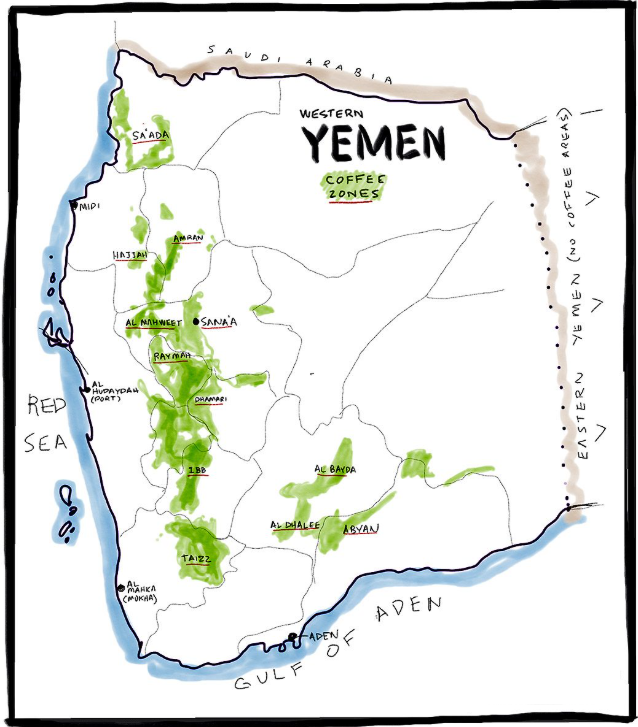
Yemen coffee, often called Mocha, is one of the world's oldest and most treasured coffees, cultivated for over 500 years using traditional, sustainable methods. Grown on small,, high-altitude terrace farms, these rare heirloom Arabica beans are dry-processed, producing a complex, full-bodied cup with notes of dark chocolate, spice, and dried fruit.
Historical Significance and Origin
Birthplace of Commercial Coffee: Yemeni Sufi monks were the first to cultivate coffee and brew it, turning it into a social drink in the 15th century.
The "Mocha" Port: The port city of Al-Mukha (Mocha) was the exclusive, worldwide gateway for coffee trade for over 200 years.
Original "Mocha Java": Historically, the two main types of coffee traded globally were from Mocha (Yemen) and Java (Indonesia).
Cultivation and Production
Ancient Methods: Coffee is still grown on ancient, terraced mountain fields, often at altitudes over 8,000 feet, without chemicals.
Smallholder Farms: Production is fragmented among roughly 300,000 tiny family farms.
Natural Processing: Cherries are sun-dried, typically on rooftops, allowing the fruit to dry onto the seed, which imparts a unique, rustic, and complex flavor.
Rare Heirlooms: Yemen grows unique, ancient heirloom Arabica varieties like Ismaili, Matari, and Hirazi.
Flavor Profile and Characteristics
Complex Taste: Known for a winey acidity, with deep notes of chocolate, dried fruit, and spices.
Irregular Beans: The beans are often small,, irregular, and "rough-looking" due to traditional, rustic processing.
Regional Blends: Coffee is usually named after its region of origin, such as Sanani, Hajjah, or Khulani.
Market and Culture
High Cost: Due to scarcity, labor-intensive, hand-picked methods, and political instability, Yemeni coffee is a luxury product, with prices sometimes reaching $240 per pound.
Hospitality Symbol: Coffee is deeply rooted in Yemeni culture, served to guests as a sign of respect and generosity.
Rare Varieties: Bani Mattar (Mattari) is particularly renowned, grown in the highest regions and known for notes of spice, tobacco, and grape-like acidity.